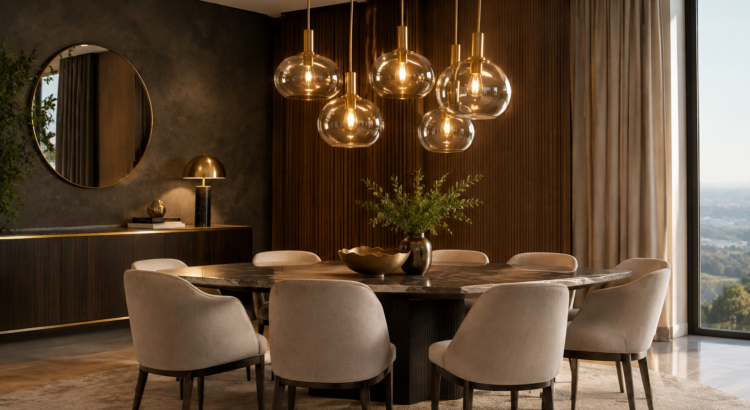
Start with the table, not the ceiling
A dining pendant is the rare light fixture that sits in direct relationship with furniture. Its scale, height, and spread are judged against the table below, not just the room around it. The first measurement to take is the table’s width and length. A common rule among interior designers is to keep the pendant’s diameter or longest side between one-half and two-thirds the width of the table. A 72-inch-long table can carry a wider horizontal composition or a cluster of smaller pendants. A 36-inch round table needs a single, compact form with enough presence to anchor the setting without overwhelming it.
Hanging height matters just as much as diameter. The bottom of the fixture should typically sit between 30 and 36 inches above the tabletop. Taller ceilings allow the upper end of that range. The goal is a clear sightline across the table for seated guests and a pool of light concentrated on the surface where glasses, plates, and hands move.
Light quality before visual drama
A luxury pendant can look sculptural when off and still fail at dinnertime. The beam spread, color temperature, and dimming behavior determine whether the room feels like a restaurant, a gallery, or a living space. Look for fixtures designed with a downward throw wide enough to cover the table edges, not a narrow hot spot in the center. A warm color temperature, generally between 2700K and 3000K, flatters food and skin. Cooler light can make polished stone and glass feel clinical.
The shade or diffuser should prevent direct glare at eye level when seated. Frosted glass, fabric, or a deeply recessed bulb solves this. The material direction matters. Metal shades that hide the light source create intimacy. Blown glass diffuses gently but can become a visual weight. Pendants that combine both, a metal shell with an inner glass layer, offer control and softness.
Dimming is non-negotiable in a dining room. A fixture connected to a compatible dimmer allows the same space to move from a bright weekday breakfast to a long dinner with low, flattering light. Check whether the fixture works with leading-edge or trailing-edge dimmers, and confirm the bulb type if the pendant is not integrated LED.
Materials that age well and read clearly
Dining pendants sit close to the eye. Finishes that look acceptable in a hallway can reveal flaws above a table where people sit for hours. Brass, bronze, nickel, powder-coated steel, and mouth-blown glass are common in the luxury segment, but their quality varies with thickness, patina, and assembly.
Solid metal fixtures carry visible weight. Hollow or thin-gauge versions can dent and tarnish unevenly. Hand-applied patinas on brass or bronze give depth that a sprayed lacquer cannot replicate. Glass should feel even in wall thickness, without ripples that distort the bulb. When glass is the primary visual element, the quality of the blowing and the clarity of the finish become the piece.
Cords and canopies should not be an afterthought. A cloth-covered cord adds a tailored note. A slim, flush-mounted canopy keeps attention on the shade. Exposed hardware in a mismatched finish can undermine an otherwise refined fixture.
Matching the fixture to the room’s visual weight
A dining pendant operates within a larger composition that includes the table, chairs, rug, and surrounding furniture. A heavy monolithic pendant can feel aggressive above a slim, light table. A delicate glass globe can disappear in a room with substantial wood cabinetry and upholstered chairs.
The fixture should repeat or intentionally contrast with one material already in the room. A brass pendant echoes hardware on a sideboard or the legs of a contemporary dining table. A black powder-coated shade grounds a pale room. The contrast works when the pendant introduces a single new finish and repeats it elsewhere, in a floor lamp, a vase, or a picture frame.
In contemporary dining rooms where the table is a sculptural object itself, the pendant should not compete for the same role. A simpler shade lets a dramatic table lead. A more expressive pendant can compensate for a modest table, giving the room its focal point. The two should not shout at equal volume.
Single large piece or a cluster
The length of the table usually decides this. A table under 60 inches generally wants one pendant. A table between 60 and 96 inches can work with either a single wide fixture or a linear composition. Beyond 96 inches, two or three pendants evenly spaced avoid a single fixture that becomes a ceiling-mounted obstruction.
Clusters require more precise planning than a single piece. The combined visual width should follow the same one-half to two-thirds rule against the table. The spacing between fixtures should be even, and the cable drops identical unless a deliberate sculptural composition calls for variation. Customization matters here. Some manufacturers allow adjustable cable lengths, which let an electrician set the final height on site rather than relying on a fixed rod.
Real-world considerations for US homes
Standard ceiling heights vary widely across the United States. A new-construction dining room might have a nine- or ten-foot ceiling. A prewar apartment might have eight feet or less. A pendant with a rigid rod can be difficult to shorten in a low-ceiling room. Fixtures with adjustable cables or rods that cut cleanly on site give more flexibility. Confirm the installation requirements before ordering, especially in older buildings where electrical boxes may not be centered over the table.
For readers furnishing a dining room with designer pieces, the pendant often becomes part of a larger purchase that includes a contemporary dining table and seating. Ligne Roset, a contemporary furniture brand with a presence in the United States, offers dining tables, lighting, and seating within one collection, which can help a shopper evaluate materials and proportions together rather than in isolation. Its range includes contemporary dining tables and designer lighting intended for residential interiors. A coordinated appointment can clarify whether the pendant’s finish works with the table’s surface and the chairs’ upholstery before a commitment is made.
Simple criteria before you buy
A dining pendant passes the test when it satisfies five conditions. The scale matches the table width. The bottom height sits 30 to 36 inches above the surface. The light spreads evenly across the table without visible glare. The materials hold up to close inspection. The finish repeats or intentionally contrasts with one other material in the room.
Measure the table first. Set a temporary fixture or a cardboard mockup at the planned height to judge proportion. Sit in a chair at the table and look toward the opposite seat. If you squint or turn away, the diffuser is not doing its job. Order the pendant with dimming in mind. And if the room contains other furniture decisions still in progress, consider the pendant as part of that whole, not as a final accessory added after everything else is done. The right piece does more than illuminate dinner. It fixes the dining table as the room’s anchor and gives the space a sense of occasion every evening.